Occupational Safety · Occupational Medicine · Environmental
Two fronts in one structure, keeping your operation compliant and running.
Safety reports, AVCB fire-safety certification, occupational examinations and environmental licensing, with the same engineer signing from diagnosis to delivery. On site across the Vale do Paraíba, the North Coast and Greater São Paulo; safety documentation for the whole of Brazil.
Reply within 24 business hours Quotes with no obligation In-house technical responsibility
14 standards
With training of our own
6 years
In operation, since 2020
+20 years
Of the engineer of record, in the field
Vale, Coast and Greater SP
On-site coverage
Every technical document goes out signed by an engineer of record, with an ART.
It is what NR-01 and NR-07 assume, so that the PGR and the PCMSO stand up to inspection. A document filled in through a form, with no qualified professional answering for it, does not survive a citation.
Federal Technical Registry · IBAMAVale do Paraíba · North Coast · Greater SP
01 · The company
A technical engineering structure, from design to operation.
Adamax Services provides occupational health and safety and environmental licensing under one technical structure in São José dos Campos and across the Vale do Paraíba. Our engineer of record signs the technical documents issued for these services.
Amsterdan Oliveira, engineer and outsourced technical lead for Adamax.
02 · Services
Safety, health and the environment under one engineer of record.
Start with the discipline that solves your problem: inside each one are the services we carry out and the document or the completed work you receive at the end.
Current with the NR standards, with eSocial and with the fire department.
Documentation, compliance and training to keep the company up to date with the NRs, eSocial and the Fire Department.
Occupational Safety and Health
Consulting and statutory safety documentation: we survey the hazards in your operation, produce the programmes and reports required by Brazil's Regulatory Standards (NRs) and leave the company ready for labour inspection and for the occupational health events of eSocial, the country's mandatory digital reporting system.
Who it is for
Factories, operation, building condominiums and companies of any size with registered employees. From the very first hire, a company is already required to maintain a risk inventory and a PGR risk management programme.
Problems it solves
Citations and fines from labour inspection over missing or expired documentation
Outstanding occupational health events in eSocial (S-2220 and S-2240)
Uncertainty over hazardous-work and unhealthy-work premiums in labour lawsuits
Safety documentation demanded by a client, a public tender or a contracting party
What you receive
PGR risk management programme and risk inventory (NR-01)
PCMSO occupational health programme, LTCAT, PPP, emergency plan and job hazard analysis
Unhealthy-work and hazardous-work expert reports
Support for the occupational health events of eSocial
Documents signed by the technical lead, with ART
When to hire
When you hire your first employee, when expired programmes come up for renewal, when a client or agency demands the documentation, or ahead of an inspection already on the calendar. It also applies when the company changes activity, address or hazard profile.
Fire-safety certification (AVCB)
Bringing the building into compliance with the Fire Department: we prepare the technical design, carry out or coordinate the required safety measures and follow the process through to the final inspection and the issuing of the AVCB, the fire safety certificate a building needs in order to operate legally in Brazil.
Who it is for
Factories, warehouses, office buildings, condominiums, schools and any establishment that needs an AVCB in order to operate, lease, sell or renew its municipal operating licence.
Problems it solves
A building with no AVCB, or with an expired one
Failed inspections and unresolved requirements in the process
An operating licence held up for want of the certificate
Refurbishment or change of use that alters what the building must comply with
What you receive
Technical design filed with the Fire Department
Upgraded escape routes, signage (NR-26), extinguishers and hydrants
Technical support through to the final inspection
AVCB certificate issued, with its corresponding ART
When to hire
Before the current AVCB expires, when occupying or refurbishing a property, when the activity or occupancy of the building changes, and as soon as you receive a notice or requirement from the Fire Department. The earlier you start, the lower the risk of the premises being shut down.
NR safety training
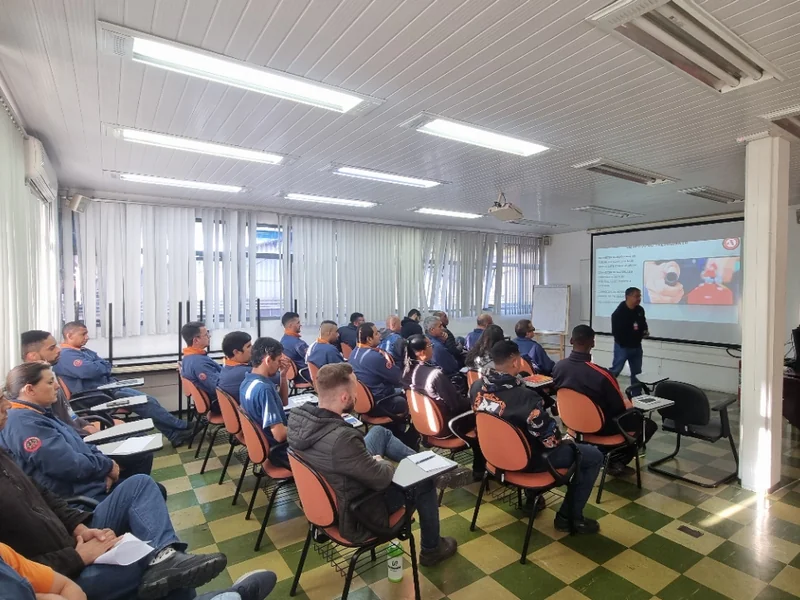
In-company training in 14 Brazilian regulatory standards, divided into 15 classes because basic NR-10 and NR-10 SEP are separate courses. Content adjusted to the real risks of your operation, an instructor carrying technical responsibility, and a certificate at the end.
Who it is for
Companies that need to train teams to work safely and to evidence that training in their safety records: on site across the Vale do Paraíba, or live online for teams anywhere in Brazil.
Problems it solves
Mandatory training that has expired or was never delivered
Teams barred from carrying out work for lack of certification
Generic courses that never address the hazards of the actual operation
Teams spread across different cities and hard to bring together
What you receive
A closed class, on site or live online, with the same course hours either way
Content adapted to the reality and the hazards of your operation
Certificate of attendance for the company's safety records
Before refresher training falls due, when hiring or moving people into hazardous work (height, confined spaces, electrical work, machinery), when forming the internal accident prevention committee, and whenever the operation changes process or equipment.
NR training: how it works
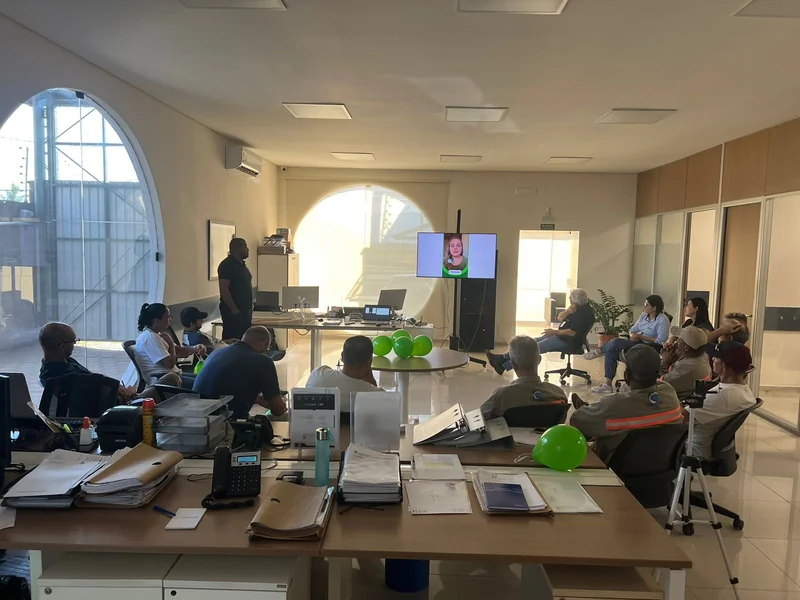
Closed classes, in person across the Vale do Paraíba, the North Coast and Greater São Paulo, or live online for any city in Brazil.
How it works
On siteAt your premises or at ours, for teams in the Vale do Paraíba.
Live onlineFor teams anywhere in Brazil, with the same course hours and certificate.
Closed in-company classesContent adapted to the reality and the hazards of your operation.
Certificate on completionAttendance records to file in the company's occupational safety documentation.
Regulatory Standards available
14 standards in 15 classes, because basic NR-10 and NR-10 SEP are separate courses. Click any one to see what it requires.
The document expires. And the standard changes before that.
We monitor deadlines and changes that affect the contracted documents. When a revision or renewal is required, we send the guidance and next steps.
01We track changes to the standardsPublications and revisions to NR-01, NR-07 and other standards that affect your operation. We assess when a change requires revision of the contracted document.
02We warn you before it expires, not afterEvery report and programme has a date. We keep that date and warn you in advance, so the renewal happens without stopping the operation and without turning into a race against the inspectorate.
03eSocial: what changes and what has to be resubmittedThe S-2220 and S-2240 events change layout and deadlines. When that happens, you receive what changed and what has to be resubmitted, in plain language rather than in an agency circular.
Included in occupational safety and health contracts at no additional cost. Guidance follows the contracted scope and applicable deadlines.
NR-01 — General provisions and risk management
The standard that organises all the others. It defines Occupational Risk Management (GRO) and requires the company to keep a risk inventory and a Risk Management Programme (PGR).
Who needs it
Every company with a registered employee, from the first hire onwards. An establishment in risk grade 1 or 2 with few employees has a simplified route inside the standard itself, not an exemption.
How the training works
The class presents the GRO, the risk inventory and the action plan to the people who will run that system inside the company. It does not replace preparing the PGR, which is a technical document signed by a qualified professional.
NR-05 — CIPA accident prevention commission
It creates the Internal Commission for Accident and Harassment Prevention (CIPA), made up of representatives elected by the employees and appointed by the employer.
Who needs it
Establishments that reach the threshold set in the standard, which crosses the number of employees with the risk grade of the activity. Below that cut-off, one person is appointed to carry out the same duties.
How the training works
A closed class for members and alternates, before they take office. The number of hours varies with the establishment's risk grade, and the standard requires part of the content to deal with preventing and tackling harassment.
NR-06 — Personal protective equipment
It defines personal protective equipment, the duty to supply it free of charge and suited to the risk, and the duty to train whoever will use it.
Who needs it
Every company that supplies protective equipment — in practice, every company with a risk identified in its PGR.
How the training works
Training on correct use, storage, cleaning, the limits of protection and the validity of the approval certificate. Handing out protective equipment without recorded training does not meet the standard and does not protect the company in a labour claim.
NR-10 — Safety in electrical installations and services
It sets the requirements for work with electricity, from low to high voltage, including de-energising, temporary earthing and the installation record book.
Who needs it
Every worker who interacts directly or indirectly with electrical installations and electrical services, including anyone working nearby.
How the training works
A 40-hour basic course, with a refresher every two years — or sooner, if the worker changes role, company or installation, or if a procedure changes.
NR-10 SEP — Electrical power systems
A supplementary NR-10 module for power generation, transmission and distribution, and for work on live lines.
Who needs it
Anyone who has completed the basic course and will work on power systems or near them. The typical case is a crew working on lines, poles and substations.
How the training works
A 40-hour supplementary course, always after the basic one, with a refresher every two years. It is the second NR-10 class: that is why our catalogue has 15 classes for 14 standards.
NR-11 — Transport, handling and storage of materials
It regulates the transport, handling, storage and moving of materials. Forklifts, overhead cranes, hoists, winches and stacked material all fall under it.
Who needs it
Operators of powered handling equipment and anyone who moves through the area where they work.
How the training works
Theory and hands-on training on the company's actual equipment, followed by written authorisation from the employer and an operator identification card.
NR-12 — Machinery and equipment
It defines fixed and movable guards, emergency stop devices, maintenance procedures and the risk appraisal of each machine.
Who needs it
Operators, maintenance staff and anyone doing setup, cleaning or inspection on the machines.
How the training works
Training specific to a machine or family of machines, with content derived from the risk appraisal of your own plant. A generic NR-12 course does not settle a citation issued against a specific machine.
NR-17 — Ergonomics
It adapts working conditions to the characteristics of the people doing the work: workstation, furniture, pace, manual handling, lighting and work organisation.
Who needs it
Every company. NR-17 reaches offices, factory floors, supermarket checkouts and call centres, each with its own annex.
How the training works
Training based on the preliminary ergonomic assessment or on the full ergonomic analysis of your operation, so the content speaks about the company's real workstations and not about postures from a catalogue.
NR-18 — Construction
Health and safety conditions in the construction industry, from site planning to handover.
Who needs it
Every company that carries out the work, and the client too, which is answerable for the work it commissioned.
How the training works
Induction training when the worker arrives on site and periodic training throughout, added to the training specific to the activities present on that site, such as height, electrical work and machinery.
NR-20 — Flammables and fuels
Occupational health and safety when working with flammables and fuels, classifying installations by volume and product type.
Who needs it
Workers at installations that produce, store, handle or transport flammables and fuels above the limits in the standard, and also outside contractors who enter those areas.
How the training works
The standard organises training in levels, from induction to advanced, set by the class of the installation and by the worker's role. We define the correct level during the assessment, before the class is booked — getting the level wrong here is expensive and common.
NR-21 — Open-air work
It requires protection from sun, rain, cold and damp for anyone working outside a building, including shelter and drinking water on hand.
Who needs it
Field crews, power-grid work, external maintenance, sanitation and agriculture.
How the training works
An awareness class on sun and heat exposure, hydration, personal protection and the shelters the company is required to provide at the work front.
NR-23 — Fire protection
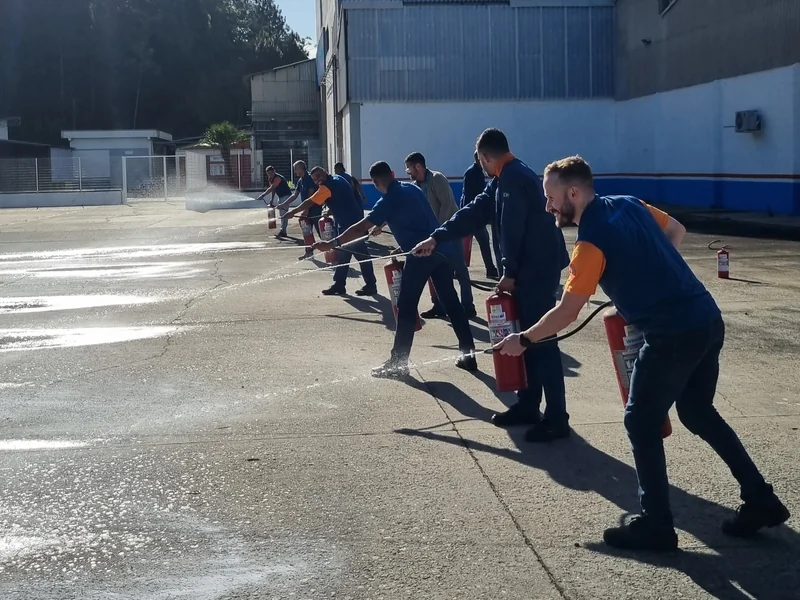
It requires every company to have enough exits for people to leave quickly, firefighting equipment in working condition and workers trained to use it.
Who needs it
Every company. There is no cut-off by size, by risk grade or by number of employees.
How the training works
Hands-on training in using an extinguisher, raising the alarm and following the escape route. It usually goes together with fire-brigade training and with the building's AVCB process.
NR-26 — Safety signage
It standardises safety colours in the workplace and the preventive labelling of chemical products, aligned with the Globally Harmonised System (GHS).
Who needs it
Companies with chemical products in the process, and any company at all when it comes to safety signage in the workplace.
How the training works
A class on reading labels, safety data sheets (SDS) and the colour code applied to your own plant, using the company's own material instead of generic examples.
NR-33 — Confined spaces
It governs entry into and work in confined spaces: tanks, silos, water tanks, galleries, wells, and any enclosure not designed for continuous occupancy and with insufficient ventilation.
Who needs it
Authorised workers, attendants and entry supervisors.
How the training works
Authorised worker and attendant, 16 hours. Entry supervisor, 40 hours. Annual refresher for all three, with rescue practice: this is the standard where most of the deaths are of the people who went in to help.
NR-35 — Work at height
It covers any activity carried out more than 2 metres above the level below, whenever there is a risk of falling.
Who needs it
Workers who carry out work at height and those who supervise them, including on one-off jobs on façades, roofs or water tanks.
How the training works
A minimum of 8 hours, with a refresher every two years — or sooner, if the procedure changes, if the worker changes role, or if something happens that indicates the need.
This area answers to the Regulatory Standards (risk management NR-01, occupational health NR-07, work at height NR-35, among others), to eSocial events S-2220 and S-2240, and to the Fire Department requirements behind the AVCB certificate.
02 · Occupational Medicine
Occupational health alongside the safety documentation.
Occupational examinations, the ASO certificate and the PCMSO programme run by the same firm that issues the PGR, with no separate clinic and consultancy for you to coordinate.
Occupational examinations and the ASO certificate
The examinations NR-07 requires over the course of employment, from the first day to the last, with the ASO occupational health certificate issued at the end of each one.
Who it is for
Any company with a registered employee: the obligation to run a pre-employment examination and issue an ASO starts at the first hire, whatever the size or risk grade.
Problems it solves
A hire on hold waiting for the pre-employment examination
An overdue periodic examination, which shows up in an inspection and in a client audit
A dismissal without the exit ASO, which opens up labour liability
A clinic and a safety consultancy that never talk to each other
What you receive
Pre-employment, periodic, change-of-risk, return-to-work and exit examinations
ASO occupational health certificate issued at the end of each examination, stating fitness for work
Tracking of expiry dates for each employee
Data organised for the worker-health events of eSocial
When to hire
Before the first hire, when taking over an operation with an existing workforce, and whenever the company changes activity or risk grade, because the examination schedule changes with it.
PCMSO and occupational health management
The occupational health medical programme (PCMSO) required by NR-07, written from the risk inventory in the PGR rather than from an off-the-shelf template: the examinations it sets are the ones your operation's risks call for.
Who it is for
Companies required to keep a PCMSO, which is the general rule for anyone with employees. The programme runs alongside the PGR, and that is why both come under the same contract.
Problems it solves
A PCMSO bought as a ready-made template, which does not describe the company's real risks
A PGR and a PCMSO written by different suppliers, contradicting each other
An overdue annual analytical report
An inspector's demand for consistency between the risk on record and the examination actually carried out
What you receive
A PCMSO written from the risk inventory in your own PGR
Examination schedule by role and by risk
Annual analytical report
A single point of contact for both the safety documentation and the occupational health documentation
When to hire
Alongside the PGR whenever possible, because one is the basis of the other. If the PGR already exists and was written by a third party, we review the risk inventory before writing the programme.
Examinations of greater complexity
Not every examination set out in a PCMSO happens in the same place. Imaging examinations, such as X-rays, and others of greater complexity are referred to partner clinics, and the result comes back inside the same process.
Why we say this upfront
Because the alternative is finding out mid-contract. The limit is stated here: Adamax runs occupational medicine and coordinates the referral, and the imaging examination itself is carried out by a partner.
What changes for you
A single point of contact, even when the examination is carried out elsewhere
The result added to the medical record and to the ASO
No hiring and chasing a clinic on your own
This area answers to NR-07 (the PCMSO occupational health programme and occupational examinations) and feeds the worker-health events of eSocial. The PGR, which is the basis of the risk inventory, is in section 01.
03 · Environmental
The environmental licence is what allows the operation to start.
Studies, licensing and compliance with licence conditions, to start or to keep the operation running lawfully.
Environmental licensing
End-to-end environmental consulting to start or keep the operation lawful: studies, filing and handling of the process with the competent environmental agency, through to the permit issued or renewed.
Who it is for
Factories and developments whose activity requires an environmental permit to start or to continue operating.
Problems it solves
Operating without a permit, or with an expired one
A process stalled at the environmental agency over a technical requirement
What you receive
Environmental studies and filing with the competent agency
Permit issued or renewed
When to hire
Before starting the activity or the operation, well ahead of the current permit's expiry date (agency review times are long), and when expanding or altering the production process.
CTF/IBAMA and permit conditions
After the permit comes the follow-up: the Federal Technical Registry (CTF/IBAMA) up to date and every permit condition met, evidenced and filed.
Who it is for
Companies that need to keep their CTF/IBAMA registration active and already hold a permit with conditions to meet.
Problems it solves
Permit conditions with nobody responsible for meeting and evidencing them
An environmental requirement or infraction notice received
What you receive
Federal Technical Registry (CTF/IBAMA) in good standing
Conditions met, with the evidence filed
When to hire
Right after the permit is issued, and whenever you receive an environmental requirement or infraction notice.
Environmental expert assessment and monitoring
A technical diagnosis of what the operation causes or of what the site carries: expert assessment, monitoring and environmental risk analysis.
Who it is for
Companies that need to measure and evidence the environmental performance of their operation, and anyone buying, selling or leasing a site.
Problems it solves
Doubts about environmental liabilities when buying, selling or leasing a site
Required environmental monitoring with no technical professional responsible for carrying it out
What you receive
Expert assessment, monitoring and environmental risk analysis
Technical report with registered technical responsibility
When to hire
Before buying, selling or leasing a site, and whenever the permit or the environmental agency requires monitoring.
Need to bring your operation into compliance?
You have just seen the two fronts. Tell us which one solves your case, or describe the problem and we will tell you which it is.
From small businesses to municipalities in public tenders.
A company with a tax ID and registered staff starts owing documentation from its first hire. A public body starts at the tender notice. The technical structure that answers to both is the same; what changes is the route to it. Click your sector to see what is usually required.
Private sector 4 areas
Public sector 4 areas
Factories and plants
An industrial plant carries almost every obligation at once: machine risk, electrical risk, confined space, work at height, noise and, nearly always, an environmental permit tied to the production process.
What is usually required
PGR and risk inventory (NR-01), surveyed in the plant and not taken from a generic template
PCMSO and LTCAT with the noise, heat and chemical-agent measurements from your own process
Machine guarding and safety upgrades (NR-12), with risk appraisal
Confined-space entry procedure and permit (NR-33)
Electrical installation record book (NR-10), plus SEP where there is high voltage
Building AVCB fire-safety certificate and environmental operating permit, according to the activity
The practical advantage here is not slicing the job up. The same engineer of record who identifies the risk signs the report and specifies the remediation, instead of handing the problem to a second supplier halfway through.
Residential and commercial managed buildings
A managed building has two fronts that usually end up with different suppliers and should not: the building itself and its own payroll staff.
What is usually required
AVCB, at renewal and whenever the occupancy or the use changes
Lightning protection with a report and earthing measurements
PGR and PCMSO for in-house staff: caretaker, front desk and cleaning
NR-35 for any work on the façade, water tank or roof, including by outside contractors
NR-10 for work on the electrical panel
The building manager is personally answerable for part of this. An expired document in a managed building rarely surfaces at a calm moment: it surfaces at insurance renewal, at the sale of a unit, or after an accident.
Construction sites
Construction sites draw the most frequent inspections and the longest standard. NR-18 requires the documentation to be ready before the first crew arrives, not after.
What is usually required
Site PGR and risk management for the site (NR-18 with NR-01)
PCMSO with the examinations specific to the site's job roles
Training for height (NR-35), electrical work (NR-10), machinery (NR-12) and entry induction
Preliminary risk analysis (APR) for critical activities, revised whenever the phase changes
You can hire the design alone and carry it out with whoever you prefer, or hand the design and documentation to a single engineer of record. Both options are on the table from the proposal onwards.
Retail and services
This is the company most often taken by surprise. The obligation usually appears at the renewal of the operating permit, or when the accountant reports that eSocial is rejecting the safety events.
What is usually required
PGR and risk inventory, from the first registered employee onwards
PCMSO health programme with pre-employment, periodic and exit medical certificates
LTCAT and PPP records where there is exposure to harmful agents
AVCB fire-safety certificate for the shop, office or warehouse unit
An operating permit kept current, with the technical documentation it requires
A small, low-risk company has a simplified route inside NR-01 itself. What it does not have is a blanket exemption, and the difference between the two is exactly what the inspection asks about.
City governments and public bodies
A public body reaches us by two routes. Either it contracts through a tender and Adamax bids as a supplier, or the body itself needs to bring its own buildings and its own staff into compliance.
What we deliver in both cases
Technical documentation signed by an engineer of record, with an ART filed for each service
Occupational health and safety and environmental licensing documentation for public bodies
Safety reports and programmes for the body's own staff
Environmental studies and permitting with the competent authorities
AVCB and fire-safety upgrading of publicly owned buildings
Qualification requirements change from one tender to the next. Send us the tender notice or the terms of reference and within 24 business hours we will tell you what Adamax covers directly and what depends on a consortium or a licensed third party. We would rather say that before the bid than after the award.
Hospitals and healthcare units
Healthcare adds up requirements that no other sector faces all at once: biological risk, infectious waste, medical gases and installations that can never be shut down.
What is usually required
PGR and PCMSO covering the biological, chemical and radiation risks of the service
Healthcare waste management plan (PGRSS)
AVCB fire-safety certificate with an escape route suited to patients who cannot move on their own
Hazardous-work reports, which in this sector are the main source of labour litigation
Lightning protection and a report on the electrical installations
NR-32 is the standard specific to this sector. Adamax prepares the unit's safety documentation; NR-32 training is not among the 14 standards in our catalogue. If it is part of the scope, we say so in the proposal instead of letting you find out later.
Schools and publicly owned buildings
A public building in collective use has a high occupancy and users who do not decide for themselves — and, because of that, a stricter inspection.
What is usually required
AVCB and upgrading of fire-safety measures
Accessibility to Brazilian standard NBR 9050, from the building entrance to the toilets
Lightning protection and a report on the electrical installations
PGR and PCMSO for in-house staff and for the contractors working in the building
In a school building, the site visit and data collection almost always have to fit the academic calendar. That goes into the plan from the first version of the proposal, not as a last-minute detail.
Public archives and storerooms
Archives and storerooms concentrate a high fire load in a small area. And unlike commercial stock, the collection cannot be replaced.
What is usually required
Fire-load calculation and a firefighting system suited to the collection
Building AVCB fire-safety certificate, with the correct occupancy classification
Humidity, ventilation and water-ingress control
Electrical installation sized for the storage density
Shelving, circulation and escape routes suited to the occupancy
The same logic applies as in the other areas: the report identifies the remediation, with a single engineer of record.
On site across the Vale do Paraíba, the North Coast and Greater São Paulo. Safety documentation anywhere in Brazil.
Based in São José dos Campos, state of São Paulo, travelling across the Vale do Paraíba, the city of São Paulo, Greater São Paulo and the North Coast. Technical visits and on-site inspections outside that area depend on a travel assessment.
04 · International enquiries
We also work outside Brazil.
From a one-off service to a long-term contract. Pick the country to see what Adamax does there and what depends on a locally licensed engineer.
Write in your own language. We reply in the same one, within 24 business hours. Portuguese, Spanish and English, through the form, by e-mail or on WhatsApp. This site has a full version in all three languages.
Before we take on work outside Brazil, we agree on what can actually be delivered. Every country has its own legal and professional liability requirements. We settle with you what Adamax carries out directly and what needs an engineer licensed in that country. The NR standards and the registrations mentioned on this site are Brazilian.
07 · Clients
Some of our clients
Companies that have been close to our work.
08 · Why choose Adamax
Technical responsibility, local presence and integrated delivery.
Two fronts in one technical structure, to organise documents, examinations and licences with a clear scope.
One signature for both frontsTechnical documents issued under the responsibility of an engineer registered with the CREA, with an ART filed for each service. Safety reports, occupational health programs and environmental permits are issued under the same technical responsibility, without coordinating three suppliers who blame one another when something fails.
Physical presence where most just send a PDFWe go to your site across the Vale do Paraíba, the North Coast and Greater São Paulo. The risk that goes into the PGR is what the engineer saw in your operation, not what a form inferred from your activity code.
Reply within 24 business hoursYou talk straight to the people doing the work, with no middleman and no ticket queue.
Safety documentation for all of BrazilOutside our on-site coverage area, safety documentation and live online training serve any city in the country, with the same course hours and the same certificate.
How this compares with what you find today
Three kinds of supplier compete for the same compliance budget. They do not deliver the same thing, and the difference tends to show up on the day of the inspection.
Comparison between an online safety platform, a training-only company and Adamax Services
Criterion
An online safety platform
A training-only company
Adamax Services
Who signs the document
A remote professional, assigned by the platform
Issues neither reports nor programmes
The engineer who was in your operation
Site visit
No
Yes
Yes, across the Vale do Paraíba, the North Coast and Greater São Paulo
Occupational examination and ASO
No
No
Yes, with the PCMSO that set the examination
Environmental permitting
No
No
Yes, from the study to the permit issued
NR training
Sometimes, as recorded video
Yes, in an open class
Yes, in-company, in person or live online
AVCB and the Fire Department
No
No
Design, upgrading and follow-through to the inspection
When the standard changes
You find out at your next login
Not applicable
The warning comes from us, before it expires
09 · Frequently asked questions
Common questions
It depends on size and activity, but three requirements reach almost every private company operating in Brazil. Safety documentation: from the first registered employee, the risk inventory and the PGR (NR-01) are already mandatory, followed by PCMSO, LTCAT and PPP, which feed the safety events in eSocial. AVCB: the building needs its fire department inspection certificate in order to operate, be leased or sold, or to renew the municipal licence. Environmental permit: where the activity requires one, it must be issued before operations begin, and agency review times are long.
You do not need to know which of these applies to you in order to start. Describe your operation through the form: within 24 business hours we tell you what is required, what is missing and what the next steps are.
Both, and they go together on purpose. The PGR identifies the risks; the PCMSO decides, based on that assessment, which examinations each job role needs and how often. When both come from the same firm, the examination the worker takes matches the risk the report recorded, which is exactly what the labour inspection checks. Adamax conducts the occupational examinations (pre-employment, periodic, change of risk, return to work and termination) and issues the ASO. Imaging tests, such as X-rays, and other more complex examinations are referred to partner clinics, and the result comes back into the same process.
For a document that depends on measurement or on recognising the risk on site (PGR, LTCAT, a hazardous-work report, an AVCB design), yes. That visit is exactly what separates a valid report from a form filled in from your activity code. Across the Vale do Paraíba and the North Coast it is included.
For training, you choose: in person at your company or live online, with the same course hours and the same certificate. Outside our on-site coverage area, documentation and online training serve any city in Brazil; technical visits and on-site inspections depend on an assessment of the travel involved.
Almost always, and it is usually the cheaper route. We review what exists and tell you what is still valid, what has expired and what has to be redone because the standard changed after it was issued: NR-01 and NR-07 have both been amended several times since 2020.
It is not unusual for a client to arrive thinking everything has to be new and leave needing two revisions. Send us what you already have along with your request for a quote.
It depends on the deadline in the notice and on what the notice demands. Tell us the date and the item cited in your very first message: that information changes the order of the work and, sometimes, the whole scope. Some items are resolved with a document; others depend on construction work, and construction work has a schedule of its own.
A short deadline is exactly the case where it pays to use the form instead of waiting for a reply by e-mail.
In person, across the Vale do Paraíba, the North Coast and Greater São Paulo. Our base is in São José dos Campos, São Paulo state, and we mobilise crews to Taubaté, Jacareí, Caçapava, Jambeiro, Monteiro Lobato, the other towns in the region, the city of São Paulo, Caraguatatuba, São Sebastião, Ubatuba and Ilhabela.
For the rest of Brazil, safety documentation and live online training serve any city. Technical visits and on-site inspections outside that area depend on an assessment of the travel involved, and we say so before quoting. Outside Brazil, see international coverage.
Within 3 business days.
10 · Contact & quotes
Let's size up what you need.
Tell us the challenge on your project and we come back with the next steps. Quotes are prepared case by case, on request.
You describe what you needThrough the form or by phone.
We review and get back to youWithin 24 business hours, with the next steps and what it takes to get started.
Proposal and deliveryScope, timeline and price in writing. The work or the document is issued under our own technical responsibility.